



Overview
Hair transplant hairline repair rebuilds a pluggy, too-low, or uneven hairline from earlier work — usually 8 to 12 months later — by removing misplaced grafts and feathering a new edge with single-hair FUE.
A pluggy or ruler-straight front row is a design failure, not bad luck: multi-hair grafts at the wrong angle are punched out, recycled when possible, and replaced with a soft, irregular single-hair transition zone.
A hairline placed too low is the hardest version to reverse; surgeons can raise it by extracting the lowest grafts, but remaining donor supply and scar tissue set the ceiling.
Through Doctours, repair cases go to surgeon-led clinics across 15 in-person-vetted partners, with all-in packages from $2,500 to $7,000, deposits from $300, and financing up to 36 months for eligible US and Canada patients.
Doctours is free for patients: you send photos, a named surgeon reviews whether repair makes sense now, and a US-based coordinator stays reachable through the 12-month growth window.
Hair transplant hairline repair is a revision procedure that rebuilds a pluggy, too-low, or uneven hairline from earlier work by punching out misplaced grafts and feathering a new edge with single-hair FUE — usually 8 to 12 months after the original surgery — with Doctours all-in packages from $2,500 to $7,000.
You have probably already named it in your own head. The straight edge. The row of plugs that catch the light. The temples that don't match. And the thought that shows up every time you lean toward a bathroom mirror: people can tell.
Fair question. A bad hairline is not a small cosmetic miss. It is the one part of a transplant the world actually sees, and living with it can feel like wearing the first surgery on your face. Here's the thing: most of those lines can be rebuilt. Not erased overnight, and not by the clinic that drew them too low in the first place. By a revision surgeon who designs a softer edge, conserves the donor you have left, and tells you honestly what is worth fixing now.
Through Doctours, that matching happens before anyone books. Photos go to a named surgeon at an in-person-vetted clinic — not a sales desk — so the plan starts with what your hairline actually needs, not a graft-count upsell.
What Does a Bad Hairline Look Like After a Transplant?
A bad hairline usually fails in one of three ways, and naming yours is the first repair decision. Pluggy means chunky multi-hair grafts sitting in the front row at the wrong angle, so hair stands up instead of lying flat. Too-low means a "teen line" crowding the forehead — dense for a year, then stranded as native hair keeps thinning behind it. Uneven means one temple higher than the other, a ruler-straight edge, or peaks that don't follow your skull. The International Society of Hair Restoration Surgery treats the frontal hairline as the defining test of surgical artistry because the human eye looks there first.
Most of these traces go back to rushed planning or a technician drawing the line, not to bad luck. That is a hairline-design failure, and it is exactly what a careful revision surgeon spends a career undoing. Our wider guide to botched transplant repair covers donor overharvesting and scarring; this piece stays on the front — the line you see in every photo.
Doctours only refers hairline repair to surgeon-led partners, because the person who redesigns the edge has to be the person accountable for it. High-volume mills are how a lot of these hairlines got here. A surgeon-led clinic is how they get rebuilt.

How Do Surgeons Soften a Pluggy or Uneven Hairline?
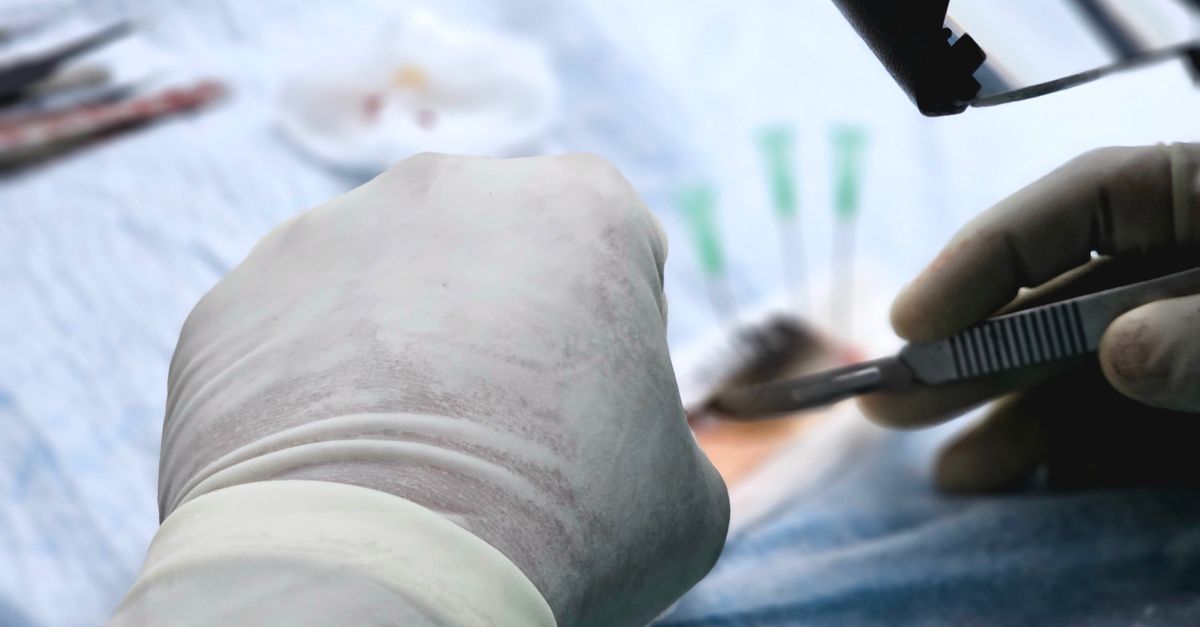
Repair is slower than the first surgery because the second surgeon inherits someone else's pattern. For a pluggy front row, the usual sequence is punch excision of the multi-hair grafts, recycling follicles that survive the extraction, and replacing the edge with single-hair grafts set nearly flat against the scalp. An uneven or ruler-straight line gets the same feathering: singles scattered ahead of a thickening zone, with the temples rounded instead of meeting in a hard corner. Put simply, the goal is a transition zone that looks like hair, not a line.
Two skills separate a real rebuild from a cosmetic patch. First, extraction — pulling a misplaced graft without destroying the follicle or the surrounding skin is harder than placing a fresh one. Second, restraint. Over-packing a scarred hairline risks the same poor blood supply that made the first result look harsh. Clinics like MetropolMED, where Cemal Karayazi leads advanced FUE and DHI at a 4.8 average across 29 reviews, and Dr. Serkan Aygin Clinic (4.6 across 40 reviews) are vetted for that precision, not throughput.
And honestly? Some "uneven" hairlines still have late growth coming. Most surgeons wait 8 to 12 months after the original procedure before committing grafts to a repair — the same window a second session needs so you are not spending donor hair on a problem that would have softened on its own.
Can a Hairline That's Too Low Be Raised?
Often, partly. A too-low hairline is the hardest version to reverse because those grafts are already living tissue on your forehead. The repair is not a magic erase. Surgeons raise the line by extracting the lowest row — or several rows — and rebuilding a mature height, usually around 7 to 10 centimeters above the brow, with a soft, irregular edge. What they can lift depends on scar tissue, how densely the first surgeon packed, and how much donor you still have.
Which brings us to the next question: should you even try to get the eighteen-year-old line back? Almost never. The American Academy of Dermatology notes that male pattern hair loss is progressive, which is why a repaired hairline has to sit at a height that still frames your face in twenty years. Doctours sends too-low cases to surgeons who will say "raise it this far, not into another teen line" — including surgeon-led practices like Dr. Hakan Clinic, rated 4.9 across 73 reviews, where Hakan Bozkurtoğlu leads the work himself.
What if they can't raise it enough? That is a real limit, and it belongs on the table before you fly. Sometimes the honest plan is a modest lift plus feathering, not a full undo. A photo review exists to name that ceiling early — not after you have already packed a bag.

How Much Does Hair Transplant Hairline Repair Cost?
Repair often costs as much as the original surgery because it is slower, more technical work. Through Doctours, all-in packages across 15 partner clinics run from $2,500 to $7,000 in 2026. That number covers the procedure plus typical package pieces — hotel and transfers sit inside plans like Heva Clinic's $4,200 Gold — not a per-graft surprise after you land. Deposits start at $300. Financing spreads the cost over monthly payments up to 36 months for eligible patients in the US and Canada.
Hairline problem | Typical repair | Example Doctours package |
|---|---|---|
Pluggy or straight front row | Punch excision + single-hair FUE | $2,500 Standard at Art Line or Esthetic Hair Turkey |
Uneven temples or thin edge | Feathering with singles | $2,800 Premium at MetropolMED |
Too-low teen line | Extract lowest grafts, rebuild higher | $4,000 Standard Program at Dr. Serkan Aygin Clinic |
Hairline plus extra density | Full revision session | $4,200 Gold at Heva Clinic; $7,000 at American Mane or Esthetic Hair Miami |
A few things are worth holding onto. These are starting packages, not a promise that your repair will land on the cheapest row — a too-low line with a thin donor can need the slower, more expensive session. Doctours is free for patients; clinics pay a referral fee, so nobody on our side is paid more for pushing the priciest room. If a bargain quote is what drew the first line too low, that is the pattern to break, not repeat.
How Does Doctours Match Hairline Repair to the Right Surgeon?
It starts with photos, not a pitch. You send images of the current hairline and donor, and a named surgeon reviews whether repair makes sense now, later, or at all — because waiting for month twelve is sometimes the better move. Doctours vets every partner clinic in person before listing it, verifies the operating surgeon by name, and screens for extraction skill that hairline revision actually requires. Three Turkey partners — Heva Clinic (4.7 across 81 reviews), MetropolMED, and Vialife Clinic — hold International Health Tourism Authorization Certificates from the Republic of Turkey Ministry of Health.
Before you go, your coordinator gathers original records and confirms the repair plan in English. While you're there, you are a known patient at an inspected clinic — not a walk-in at a mill. After you're home, a US-based coordinator stays reachable by call, text, or video through the 12-month growth window. Curious how a rebuilt edge should look when it is done well? Our gallery of real patient results shows the difference between a feathered hairline and a drawn-on one.
The Bottom Line
A bad hairline feels permanent when you are the one staring at it. It usually isn't. Pluggy rows can be punched and feathered. Uneven temples can be balanced. A line that sits too low can often be raised — not always all the way, and never by repeating the same rush that put it there.
The move that matters now is the same one that would have prevented this: choosing on hairline skill, not on the lowest price. Inspected clinics, named surgeons, an honest read of your remaining donor, and a US-based coordinator who will say when waiting is smarter than flying. That is the standard Doctours holds before anyone books a repair. If you want to see who is actually on that list, browse the vetted network.
You already did the hard part once. This time you get to walk in with the facts, on your own timeline, toward a hairline that disappears into your face instead of announcing the first surgery.
Not sure whether your hairline can be rebuilt — or whether you should wait? A free Doctours assessment gets your photos in front of vetted revision surgeons for a straight answer, no pressure and no commitment.
FAQs
Can you fix a pluggy hairline from a previous transplant?
Usually, yes. A revision surgeon punches out the chunky multi-hair grafts, recycles follicles that survive the extraction, and rebuilds the front with single-hair FUE set nearly flat so the edge feathers instead of looking like a row of plugs. How far it can go depends on scar tissue and how much donor hair you have left.
Can a hairline that's too low be raised?
Often, partly. Surgeons raise a too-low line by extracting the lowest grafts and rebuilding a mature height, typically around 7 to 10 centimeters above the brow. A full undo is not always possible, so a photo review should name that ceiling before you book.
How long should I wait before repairing a bad hairline?
Most surgeons wait 8 to 12 months after the original procedure before planning hairline repair. Transplanted hair sheds and regrows on its own timeline, so a result that looks harsh at month four can soften by month twelve — repairing too early risks spending grafts on a problem that would have settled.
How much does hairline repair surgery cost?
Repair often costs as much as the original surgery because it is slower, more technical work. Through Doctours, all-in packages run from $2,500 to $7,000, deposits start at $300, and financing can spread the cost over up to 36 months for eligible US and Canada patients. Doctours is free for patients — clinics pay a referral fee.
How do I fix a receding hairline that looks fake after a transplant?
A fake-looking receding hairline after surgery is usually a design problem — plugs, a straight edge, or the wrong angle — not untreated recession. Fixing it is a revision: remove or reangle the front grafts and feather a new, slightly irregular edge with single-hair FUE, after a surgeon maps your remaining donor.