




Overview
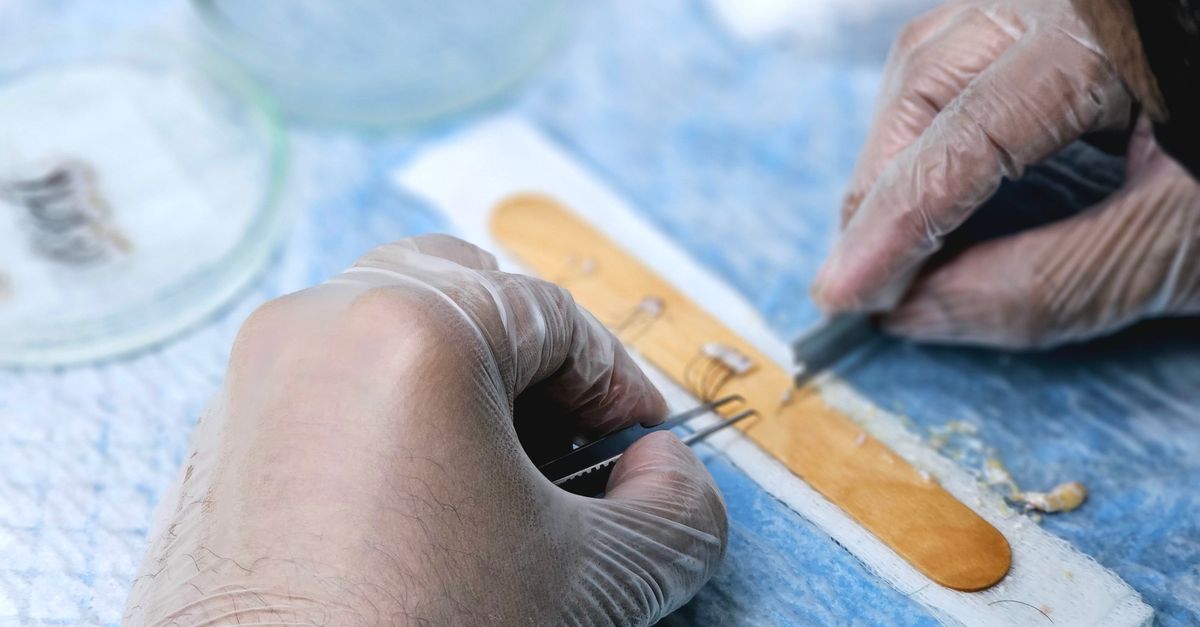
Most men need between 1,500 and 4,000 grafts for a hair transplant, with the exact number set by Norwood stage, donor density, and how much coverage you want — a receding hairline often takes 1,500 to 2,500 grafts while a hairline plus crown runs 3,000 to 4,000.
Surgeons calculate graft count from two directions at once: the recipient area measured in square centimeters times a target density of about 30 to 50 grafts per square centimeter, checked against the roughly 5,000 to 8,000 grafts a donor area can safely spare across a lifetime.
A higher graft count is not automatically better — past the donor area's safe limit, extra grafts lower survival and burn permanent donor hair, which is why advanced Norwood 6 cases are usually staged across two sessions.
Through Doctours, most vetted partner clinics charge a flat rate per procedure rather than per graft, with packages from $2,200 to $7,000, graft-tier options like Dr. Hakan Clinic's $4,500 up-to-3,500-graft package, and per-graft pricing such as Motion Clinic's roughly $3 per graft.
Doctours plans your graft count around your donor area through a real surgeon consultation, backs each booking with deposits from $300, payment plans up to 36 months, and 12 to 36 months of US-based aftercare, and has visited every partner clinic in person — three Turkey partners hold the Republic of Turkey Ministry of Health authorization.
This hair transplant graft count guide starts with the number you actually came for: most men need between 1,500 and 4,000 grafts in a single session, and where you land in that range is set mostly by your Norwood stage, your donor density, and how much coverage you want. A receding hairline alone often takes 1,500 to 2,500 grafts; a hairline plus a thinning crown usually runs 3,000 to 4,000. Surgeons do not guess that number — they measure the bald area you want filled, multiply it by a target density, and check it against how many follicles your donor area can safely spare. Through Doctours, vetted partner clinics quote that plan as a flat-rate package from $2,200 to $7,000, and most of them charge per procedure rather than per graft — so the graft count drives your result, not a surprise line on the bill.
If you have spent any time collecting clinic quotes, you have seen the number swing wildly. One place says 2,000 grafts, the next says 4,500 for the same photos, and a third just quotes a price per graft and leaves you doing the math at 2 a.m. So which one is telling the truth — and am I about to overpay for grafts I do not even need? That uncertainty is the reason a lot of guys stall right here, one quote away from booking.
Fair question. The honest answer is that graft count is part science, part artistry, and a small part sales tactic — and once you understand how the real number is calculated, the quotes stop feeling like a coin flip. This guide walks through how many grafts each Norwood stage typically needs, how a surgeon actually arrives at your number, why more grafts is not automatically better, and how graft count shows up in what you pay. By the end, you will be able to read any quote and know whether it adds up.
How Many Grafts Do You Actually Need by Norwood Stage?
The Norwood scale is the standard map of male pattern hair loss, running from a barely-receded Norwood 2 to a fully bald Norwood 7. Your stage is the single biggest predictor of graft count, because it describes how much area needs covering. The ranges below reflect what experienced hair restoration surgeons typically plan for each stage — your exact number is confirmed at consultation, not pulled from a chart.
Norwood Stage | What It Looks Like | Typical Graft Range |
|---|---|---|
Norwood 2 | Slight temple recession, mature hairline | 800–1,500 |
Norwood 3 | Deeper M-shaped temple recession | 1,500–2,500 |
Norwood 3 vertex / 4 | Frontal recession plus crown thinning | 2,500–3,500 |
Norwood 5 | Larger bald zones, narrowing mid-bridge | 3,500–4,500 |
Norwood 6 | Hairline and crown bald areas merge | 4,500–6,000 (often two sessions) |
Norwood 7 | Only a horseshoe band of donor hair remains | Donor-limited; full coverage rarely possible |
A few things matter more than the headline number. The Norwood scale measures area, not density, so two men at the same stage can need different counts depending on how thick they want the result. A higher Norwood stage also means less donor hair to work with — which is exactly why a Norwood 6 or 7 is usually staged across two sessions rather than crammed into one. The International Society of Hair Restoration Surgery treats donor supply, not just the bald area, as the limit on what any single procedure can achieve. If you are unsure of your stage, our cost breakdown for Turkey versus the United States shows how graft count and price track together across the common stages.
How Do Surgeons Actually Calculate Your Graft Count?
A good surgeon builds your number from two directions at once: how much you need, and how much you can give. The demand side is the recipient area — the surgeon measures the bald or thinning zone in square centimeters and multiplies it by a target density. Natural-looking coverage usually lands around 30 to 50 grafts per square centimeter, well below the 80 to 100 follicular units per square centimeter of untouched scalp, because the eye reads far less than full density as a complete head of hair. The hairline gets packed denser than the crown, since that is the frame everyone actually sees.
The supply side is your donor area — the permanent band at the back and sides of your head. The surgeon measures its density with a handheld densitometer and works out how many follicles can be harvested without thinning it visibly. That safe donor supply is finite: most men can spare roughly 5,000 to 8,000 grafts across an entire lifetime, across all procedures combined. A careful surgeon protects that reserve, because over-harvesting in your thirties leaves nothing for the thinning that may continue in your fifties. The way Doctours vets clinics screens for surgeons who plan around that lifetime limit, not just the photo on day 180.
Put simply, your graft count is the smaller of what you want and what you can safely spare. A surgeon quoting 5,000 grafts off a single phone photo, with no densitometry and no donor assessment, is guessing — or selling. CDC medical tourism guidance stresses that a proper in-person evaluation is part of safe care abroad, which is why every Doctours partner runs a real medical consultation before a final graft number is locked in.
Does a Higher Graft Count Mean a Better Result?
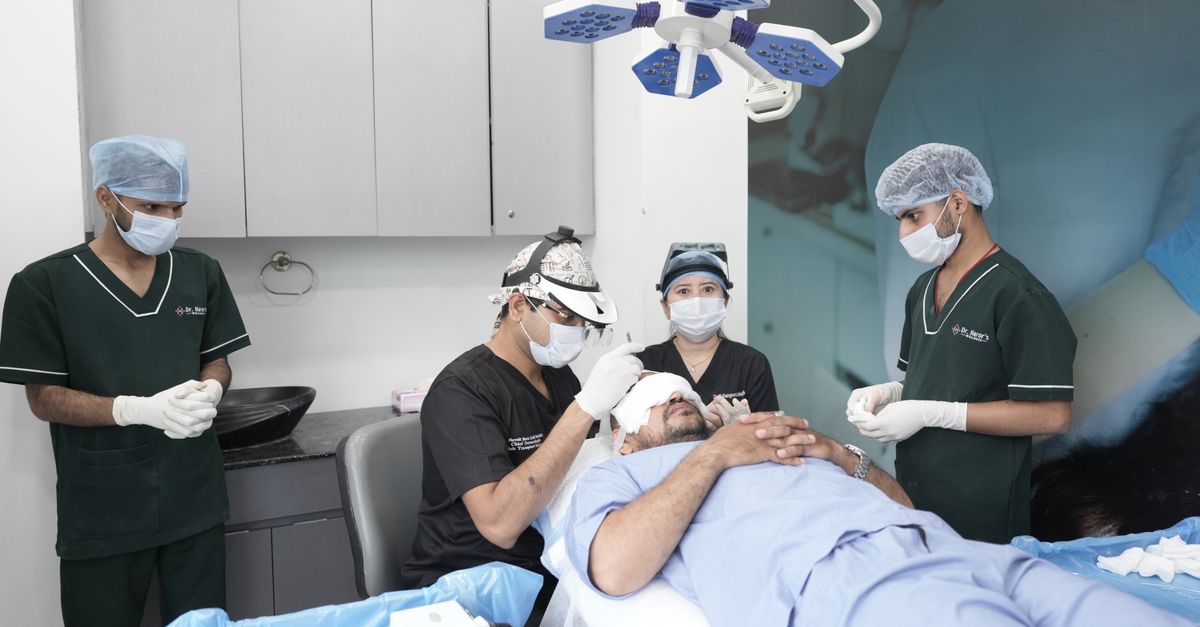
Not by itself — and this is where a lot of quotes get misleading. A bigger graft number only helps if your donor area can support it and your surgeon places each follicle at the right angle and depth. Past a certain point, packing more grafts into the same area does not add visible density; it just stresses the grafts, lowers their survival rate, and burns donor hair you cannot get back. The result you are picturing comes from graft survival and natural angling, not from the raw count alone.
This is why two surgeons can quote very different numbers for the same head. One is planning a result that still looks right in ten years, with donor hair held in reserve for future thinning. The other is quoting the biggest number the donor can survive today. The technique matters here too: our FUE vs DHI comparison covers how the implantation method affects how densely grafts can be placed, and our Sapphire FUE guide explains how channel size changes hairline packing. The number on the quote is only as good as the hands placing the grafts.
It also takes time to know whether a graft count delivered. Transplanted hair sheds within weeks, then regrows slowly over the following year — our month-by-month recovery timeline walks through when each stage of density actually shows up. A surgeon with strong reviews for long-term results is worth more than one who simply quotes a big number; across the Doctours network, partner clinics like MetropolMED (4.8 average across 29 reviews) and Dr. Serkan Aygin Clinic (4.6 across 40 reviews) are rated on outcomes, not graft inflation.
How Does Graft Count Affect What You Pay?
Graft count and price are linked, but how tightly depends on the pricing model — and that is where the real money is won or lost. Some clinics charge a flat rate per procedure, so your surgeon plans the grafts your case needs without inflating the bill. Others price per graft, which sounds transparent but quietly rewards the clinic for recommending more. Here is how the three common models look across the Doctours network in 2026.
Pricing Model | How It Works | Example Through Doctours | Best For |
|---|---|---|---|
Flat rate per procedure | One price covers the grafts your case needs | $2,200 Standard at Esthetic Hair Turkey; $2,800–$3,960 at MetropolMED | Most patients — no per-graft math |
Graft-tier package | Price set by a graft ceiling | Dr. Hakan Clinic: $4,500 up to 3,500 grafts, $5,000 up to 5,000 grafts | Large Norwood 5–6 cases |
Per-graft pricing | You pay for each graft extracted | Motion Clinic Shaven FUE at about $3 per graft | Smaller, precise sessions |
The takeaway is that a flat-rate package protects you from the most common upsell in the industry: the clinic that quotes a low per-graft price, then recommends far more grafts than you need. Per-graft upcharges are one of the hidden costs we flag most often, and our transparent-pricing guide shows what an all-in quote should include. For comparison, the same graft counts in the United States run $10,000 to $20,000 at clinics that often charge $4 to $8 per graft — see our full cost breakdown by country and method. The Doctours pricing page shows what your specific graft plan would land at across the network.

How Does Doctours Plan Your Graft Count Without the Upsell?
Through Doctours, the graft number on your quote is built around your donor area and your goals — not the clinic's margin. Every partner runs a real medical consultation, with photos or densitometry reviewed by a named surgeon, before a final count is set. Doctours is free for patients — clinics in the network pay Doctours for coordination — so there is no incentive on our side to push your graft count higher. Deposits start at $300, and payment plans run up to 36 months in USD, so the size of your session stays a medical decision, not a budgeting scramble.
Whether that plan even applies depends first on candidacy — the hair transplant candidacy criteria a Doctours surgeon checks from your photos.
The vetting is the part that protects you most. Before you book, Doctours has already visited every partner clinic in person and reviewed real donor-area results — three Turkey partners (Heva Clinic, MetropolMED, and Vialife Clinic) hold the Republic of Turkey Ministry of Health's International Health Tourism Authorization Certificate. While you are there, the surgeon confirms your graft count in person against your actual donor density, whether that is a 3,500-graft plan at Dr. Hakan Clinic or a 4,000-graft VIP session at Heva Clinic. After you are home, your US-based care team stays on a 24/7 line through the full 12-month growth window. Our guide to safety red flags abroad covers the over-harvesting warning signs that vetting screens out.
The Bottom Line
Your graft count is not a mystery, and it is not a coin flip. Most men need somewhere between 1,500 and 4,000 grafts, set by their Norwood stage, their donor density, and the coverage they want — and a surgeon arrives at the real number by measuring both what you need and what your donor area can safely spare. More grafts is not automatically better; the right number is the one that looks natural now and still holds up in a decade.
That is the part worth holding onto. Through Doctours, vetted partner clinics across Istanbul, Tijuana, Mexico City, and Warsaw plan your graft count around your donor area, quote it as a flat-rate package from $2,200 to $7,000, and back it with deposits from $300 and 12 to 36 months of US-based aftercare. The math, the vetting, and the donor-preservation planning are already handled; your job is the surgeon and the fit.
You have earned the version of this where you stop second-guessing a quote and start picturing the result — a graft plan built around your hair, not a number someone pulled to win the sale. That is the next step waiting whenever you are ready.
Want to know how many grafts your case actually needs? A free assessment gives you a surgeon-reviewed graft plan, flat-rate USD pricing, and a care team that handles every step — no pressure, no commitment.

FAQs
How many grafts do I need for a hair transplant?
Most men need between 1,500 and 4,000 grafts, depending on their Norwood stage, donor density, and how much coverage they want. A receding hairline alone often takes 1,500 to 2,500 grafts, while a hairline plus a thinning crown usually runs 3,000 to 4,000, and advanced Norwood 6 cases can need 4,500 to 6,000 grafts across two sessions.
How do surgeons calculate how many grafts you need?
Surgeons measure the bald or thinning area in square centimeters and multiply it by a target density of roughly 30 to 50 grafts per square centimeter, then check that number against how many follicles your donor area can safely spare. Donor capacity is measured with a densitometer, and most men can spare only about 5,000 to 8,000 grafts across their lifetime, so the final count is the smaller of what you want and what you can give.
Can you get too many grafts in one session?
Yes. Packing in more grafts than the donor area can support lowers graft survival and permanently depletes donor hair, which is why advanced cases are usually staged across two sessions. Beyond a certain density, extra grafts do not add visible coverage — a natural result comes from graft survival and angling, not from the highest possible number.
Does a higher graft count cost more?
It depends on the pricing model. Clinics that charge a flat rate per procedure include the grafts your case needs in one price, while per-graft clinics charge for each follicle extracted. Through Doctours, most partner clinics use flat-rate packages from $2,200 to $7,000, and graft-tier options like Dr. Hakan Clinic's $4,500 up-to-3,500-graft package keep the cost predictable for larger cases.
What is a hair transplant graft count guide?
A hair transplant graft count guide explains how surgeons decide how many grafts you need, based on your Norwood stage, donor density, and coverage goals. Doctours is a US-based medical travel company that pairs you with vetted surgeons who build that graft plan around your donor area, quote it as a flat-rate package, and back every booking with US-based aftercare.