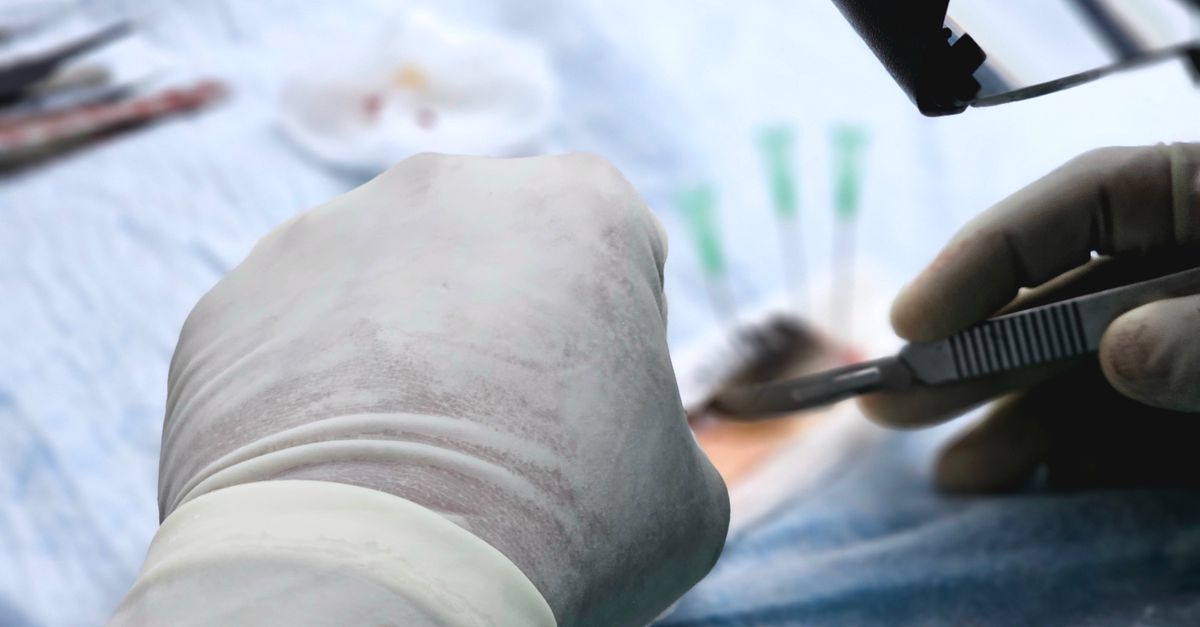





Overview
Hair transplant donor area exhaustion is real because a transplant redistributes a finite lifetime supply of roughly 5,000 to 8,000 grafts rather than growing new hair — once that reserve is over-harvested, it cannot be refilled.
Second sessions sometimes fail when the first one over-harvested the donor, when native hair loss keeps advancing past what the donor can cover, or when scar tissue from earlier extraction lowers the yield and survival of new grafts.
Good surgeons protect your future options by harvesting conservatively and evenly across the whole safe zone, leaving a reserve for later thinning, and using beard or body hair as backup donor for advanced cases.
The biggest warning sign is a clinic that quotes 4,000 to 5,000-plus grafts off a single photo or charges per graft — both reward over-harvesting, while flat-rate packages from $2,200 to $7,000 remove that incentive.
Doctours pairs you with vetted surgeons who assess donor density in person, plan around your lifetime supply, and back every booking with deposits from $300, payment plans up to 36 months, and 12 to 36 months of US-based aftercare.
Hair transplant donor area exhaustion happens when the permanent band of hair at the back and sides of your head — your donor area — has given up more follicles than it can spare, leaving too few healthy grafts for the coverage you still want. It is a real risk, because a transplant does not grow new hair; it moves a fixed, lifetime supply of roughly 5,000 to 8,000 grafts from one part of your scalp to another. Once that reserve is overdrawn, a second session can come back thin, patchy, or simply not be possible — which is why the surgeon you choose matters as much as the price. Through Doctours, vetted partner clinics plan around that reserve from day one and quote flat-rate packages from $2,200 to $7,000, so no one is paid to harvest more of your hair than you can afford to lose.
If you are reading this, you have probably already had one procedure — or you are staring down a big one — and a quiet worry has set in. What if I run out? What if I burn through my donor hair and there is nothing left to fix it later? Maybe a clinic quoted you 5,000 grafts in a single day and something about that number felt off. Maybe you are a couple of years past your first transplant and the hairline you paid for is creeping backward again.
That worry is not paranoia. It is one of the most important questions in all of hair restoration — and most clinics will not raise it, because the honest answer can cost them a sale. So let's say the quiet part out loud, then walk through what donor exhaustion actually is, why second sessions sometimes fail, and how a good surgeon protects the hair you have left.
What Is Hair Transplant Donor Area Exhaustion?
Your donor area is the horseshoe-shaped band of hair around the back and sides of your head — the zone that keeps growing even when the top thins. Those follicles are genetically resistant to DHT, the hormone behind male pattern hair loss, which is why a surgeon moves them to the front and crown and trusts them to stay. A hair transplant redistributes that existing hair; it never creates more of it. So your donor area is a savings account you can only withdraw from, never refill.
Donor area exhaustion is what happens when that account runs low — either because a surgeon took too much, too fast, or because there was never much to begin with. The donor starts to look see-through or moth-eaten, scarred in patches, and unable to safely give another graft. According to a StatPearls review of hair transplantation, donor supply — not the size of the bald area — is the true ceiling on what surgery can achieve. Most men can spare only about 5,000 to 8,000 grafts across their entire lifetime, across every procedure combined, which is why our graft count guide treats donor density as the number that really sets your plan.
Why Can't You Just Keep Taking More Grafts?
Because every graft you remove is gone for good, and the back of your head has a limit you can actually see. A surgeon measures donor density with a handheld densitometer before touching anything, then works out how many follicles can come out without leaving the area visibly thin. Push past that line and the donor does not bounce back — it stays sparse, and the small dot scars from extraction start to show through whatever hair is left.
There is a second cost that is easy to miss. Each extraction leaves micro-scarring and fibrosis in the donor, so a second harvest from the same ground is harder, yields fewer usable grafts, and those grafts tend to survive at a lower rate. That is the real reason a careful surgeon holds back in session one — not to upsell you later, but to keep your options open. The International Society of Hair Restoration Surgery frames donor management as a lifetime plan, not a single-day maximum. A surgeon who chases the biggest possible number today is spending hair you may need in your fifties.
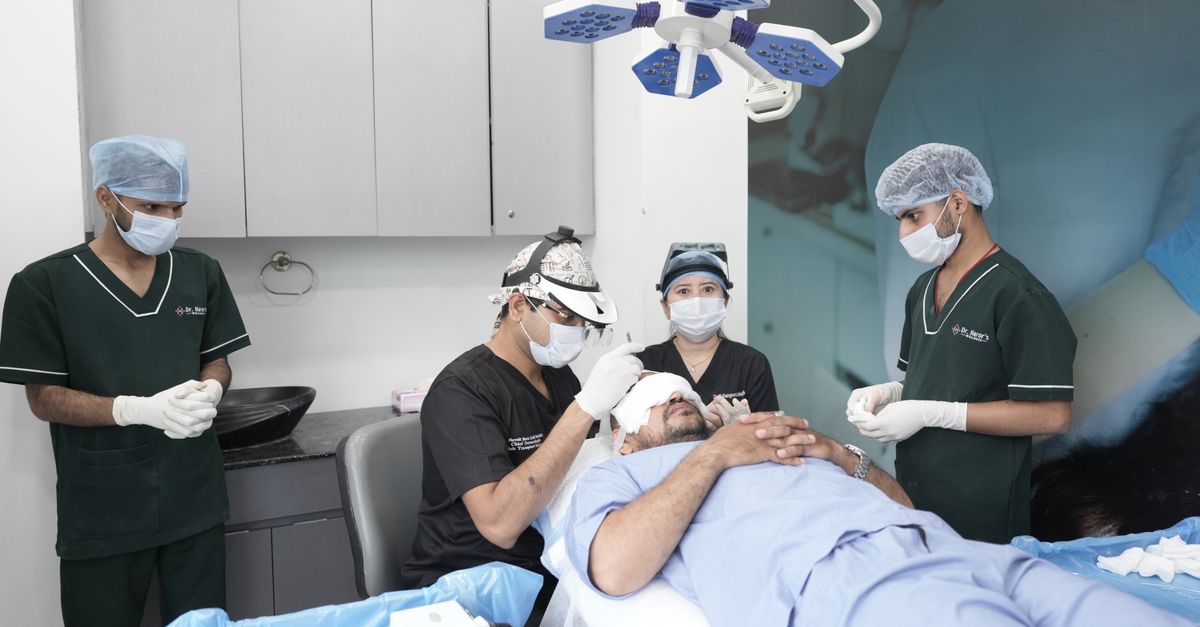
Why Do Second Hair Transplant Sessions Sometimes Fail?
A second session can disappoint for three honest reasons, and price is rarely one of them. The first is donor depletion: if the original surgeon over-harvested, there simply is not enough safe hair left to build real density a second time. The second is ongoing loss — your native hair keeps thinning on its own, so a transplant that chased an aggressive, low hairline at 28 can look stranded by 38 as the hair behind it disappears. The third is the donor's condition: scarred, over-thinned tissue yields fewer grafts, and those grafts survive less reliably than the first round.
This is why younger patients with fast-moving loss are handled so carefully. A good surgeon plans for where your Norwood stage is heading, not just where it is today, because a result that ignores future loss almost guarantees a touch-up the donor may not be able to fund. The technique matters here too — our FUE versus DHI comparison covers how extraction method affects how much donor you can responsibly use over a lifetime. A failed second session is usually a planning failure from the first one, not bad luck.
How Do Good Surgeons Protect Your Donor Area?
The protective work happens before a single graft is taken. A donor-conscious surgeon harvests evenly across the entire safe zone instead of stripping one patch, leaves enough density behind that the back still looks full, and deliberately banks a reserve for the thinning that may come later. For advanced cases, beard and body hair can supplement a tired scalp donor, stretching coverage without overdrawing the head. The whole approach treats your follicles as a budget to spend over decades, not a tank to empty at once.
The clinics that exhaust donors tend to share a profile, and once you know it, it is easy to spot. Here is how a donor-protective plan compares to a donor-exhausting one.
Donor-Protective Clinic | Donor-Exhausting Clinic |
|---|---|
Measures donor density with a densitometer before quoting | Quotes 4,000–5,000+ grafts off a single phone photo |
Harvests evenly across the whole safe zone | Over-extracts one area to hit a graft target fast |
Leaves a reserve for future hair loss | Takes the maximum the donor can survive today |
Flat-rate package, paid per procedure | Priced per graft — more grafts means more revenue |
Plans for your future Norwood stage | Chases a low, dense hairline regardless of age |
Notice the pricing line, because it quietly drives the rest. A per-graft model rewards the clinic for recommending more grafts, while a flat rate lets the surgeon take only what your case needs. Across the Doctours network, most partners charge per procedure — Esthetic Hair Turkey's Standard package runs $2,200 and MetropolMED's options range $2,800 to $4,160 — and graft-tier packages like Dr. Hakan Clinic's $4,500 up-to-3,500-graft plan cap the count rather than inflate it. Per-graft upcharges are a hidden cost we flag often, and our guide to safety red flags abroad covers the over-harvesting warning signs in more detail.

How Does Doctours Help You Avoid Donor Exhaustion?
Through Doctours, the graft number on your quote is built around your donor area and your goals — not the clinic's margin. Every partner runs a real medical consultation, with photos or densitometry reviewed by a named surgeon, before a final count is locked in. Doctours is free for patients — clinics in the network pay us for coordination — so there is no incentive on our side to push your count higher. Deposits start at $300, and payment plans run up to 36 months in USD, so the size of your session stays a medical decision, not a budgeting scramble.
Whether that plan even applies depends first on candidacy — the hair transplant candidacy criteria a Doctours surgeon checks from your photos.
The vetting is the part that protects your donor most. Before you book, Doctours has already visited every partner clinic in person and reviewed real donor-area outcomes — three Turkey partners (Heva Clinic, MetropolMED, and Vialife Clinic) hold the Republic of Turkey Ministry of Health's International Health Tourism Authorization Certificate. While you are there, the surgeon confirms your plan against your actual donor density, and clinics like MetropolMED (4.8 average across 29 reviews) and Dr. Hakan Clinic (4.7 across 17 reviews) are rated on long-term results, not graft inflation. After you are home, your US-based care team stays on a 24/7 line through the full growth window — and our month-by-month timeline shows when each stage of density actually shows up.
The Bottom Line
Your donor area is finite, and that is the one fact the whole decision turns on. A transplant moves a lifetime supply of roughly 5,000 to 8,000 grafts; it never makes more. Donor exhaustion is what happens when a surgeon spends that reserve too quickly — and a failed second session is almost always the bill for an over-aggressive first one.
Here's the reassuring part: this is entirely avoidable with the right surgeon. The clinics worth your trust measure your donor before they quote, harvest evenly, leave a reserve for the years ahead, and price by the procedure so no one profits from taking more of your hair than you need. Through Doctours, those clinics are already vetted, the pricing is flat-rate from $2,200 to $7,000, and the planning that protects your donor is built into every match — see what your plan would cost or browse the vetted network.
You have waited long enough to do this on your terms — and doing it right means protecting the hair you will still want a decade from now. That is the version of this worth choosing.
Worried about running out of donor hair down the road? A free assessment gives you a surgeon-reviewed plan built around your donor area, flat-rate USD pricing, and a care team that handles every step — no pressure, no commitment.

FAQs
What is hair transplant donor area exhaustion?
Hair transplant donor area exhaustion is when the permanent hair at the back and sides of your head has been harvested past what it can safely spare, leaving too few healthy grafts for further coverage. Because a transplant redistributes a finite lifetime supply of about 5,000 to 8,000 grafts rather than growing new hair, an exhausted donor cannot be refilled and may look thin or scarred.
Can your donor area run out of grafts?
Yes. The donor area holds a fixed lifetime supply of roughly 5,000 to 8,000 grafts across all procedures combined, so over-harvesting in one or more sessions can leave it visibly thin and unable to give more. A careful surgeon measures donor density first and leaves a reserve so future coverage stays possible.
Why do second hair transplant sessions sometimes fail?
Second sessions often disappoint because the first one over-harvested the donor, because native hair loss keeps advancing past what the donor can cover, or because scar tissue from earlier extraction lowers the yield and survival of new grafts. Most failed second sessions trace back to over-aggressive planning in the first procedure, not bad luck.
How many grafts can a donor area safely give?
Most men can safely spare about 5,000 to 8,000 grafts over their entire lifetime, across every procedure combined, though the exact number depends on individual donor density measured with a densitometer. Taking more than that thins the donor permanently and lowers the survival of any future grafts.
How do surgeons preserve the donor area for future hair transplants?
Good surgeons harvest evenly across the whole safe zone, take only what your case needs, leave a reserve for future thinning, and plan for where your hair loss is heading rather than just where it is now. For advanced cases, beard or body hair can supplement a tired scalp donor so coverage is possible without overdrawing the head.