




Overview
Hospital accreditation audits the building and the hospital system; clinic vetting confirms the named surgeon, observed operating-room practice, and verified outcomes — two layers that protect you from different failures.
Doctours applies both: JCI-accredited hospital partners such as Bumrungrad, Memorial Şişli, Liv Hospital Ulus, and Acibadem Altunizade for hospital-based care, plus a five-stage chair-level review on 15 hair transplant partners.
Five Turkey hair partners — Heva Clinic, MetropolMED, Vialife Clinic, BlueMagic Group Clinic, and Elithair — hold the Republic of Turkey Ministry of Health International Health Tourism Authorization Certificate.
Hair packages run from $2,500 at Vialife Clinic, Art Line Clinic, and Esthetic Hair Turkey to $7,000 at Esthetic Hair Miami, with BlueMagic Group Clinic's Diamond tier at $8,690 and deposits from $300.
Outcomes sit in 447 verified Doctours reviews across the hair network, and most packages include 12 months of online follow-up, with Heva Clinic's $3,000 Silver package bundling two hotel nights, transfers, and that year of follow-ups.
Hospital accreditation vs clinic vetting covers different risks: the hospital stamp audits the building — infection control, emergency response, and governance — while chair-level vetting confirms the named surgeon, observed operating-room practice, and verified outcomes, and Doctours applies both layers across 15 hair transplant partners with packages from $2,500 to $7,000.
You have probably already felt the little drop in your shoulders when a clinic homepage flashes a JCI logo. If the hospital is accredited, I am safe, right? Fair question. The catch is that a hair transplant is usually not performed in the kind of hospital that stamp was built for — and the person who will design your hairline is not what that audit names.
So let's separate the two layers. Hospital accreditation is real. Clinic vetting is real. They protect you from different failures. Knowing which one you actually need is the part most badge walls skip.
What Does Hospital Accreditation Actually Audit?
Hospital accreditation is an organization-level survey. Joint Commission International (JCI) sends surveyors on a multi-year cycle to grade a hospital against hundreds of written standards covering patient access, infection prevention, anesthesia infrastructure, emergency response, and governance. TEMOS, TÜSKA, and AACI run similar hospital-scale audits. None of them is a hair-transplant license. None of them names the surgeon who will sit at your chair.
That is still a useful layer. A hospital that cannot keep a crash cart stocked, a sterile processing unit honest, or an escalation path staffed is a hospital you should not enter for any procedure. The CDC's medical tourism guidance lists JCI among the international bodies a US patient can use to screen a foreign facility. Doctours uses that same layer where it actually fits: hospital-based partners such as Bumrungrad International Hospital, Memorial Şişli Hospital, Liv Hospital Ulus, and Acibadem Altunizade hold current JCI accreditation for the hospital, not for a dedicated hair mill in a rented suite.
Put simply, hospital accreditation audits the building and the system that runs it. Doctours treats a current, independently verifiable hospital stamp as the floor for hospital-based care — never as proof that a hair transplant surgeon is the person on the website. What a JCI-accredited hair transplant clinic stamp really means walks through that hospital standard in more depth.
Why a Hospital Stamp Does Not Vet Your Surgeon
Here is the thing most badge walls skip. A standard FUE or DHI hair transplant is an outpatient procedure under tumescent local anesthesia. There is no overnight ward, no ICU, no general-anesthesia team, and no transfusion service. The infrastructure JCI was written to inspect is largely beside the point. The risks that actually keep you up at night — a marketing surgeon swapped for a technician team, a graft-prep station that does not match the brochure, reviews that cannot be tied to a booking — live at the chair, not in the lobby.
A hair mill can rent space inside a handsome building. The building can still pass a hospital survey. That is not a contradiction. It is two different questions. Who holds the scalpel on the day, and what do their results look like a year later? Hospital accreditation does not answer either one. Doctours answers both before your name is ever sent to a clinic: the named surgeon's license is verified with the issuing national authority, a team member watches that surgeon work on an operating day, and outcomes are tracked against booking-tied reviews. Packages at those partners start at $2,500 at Vialife Clinic, Art Line Clinic, and Esthetic Hair Turkey, and run to $7,000 at Esthetic Hair Miami, with deposits from $300.
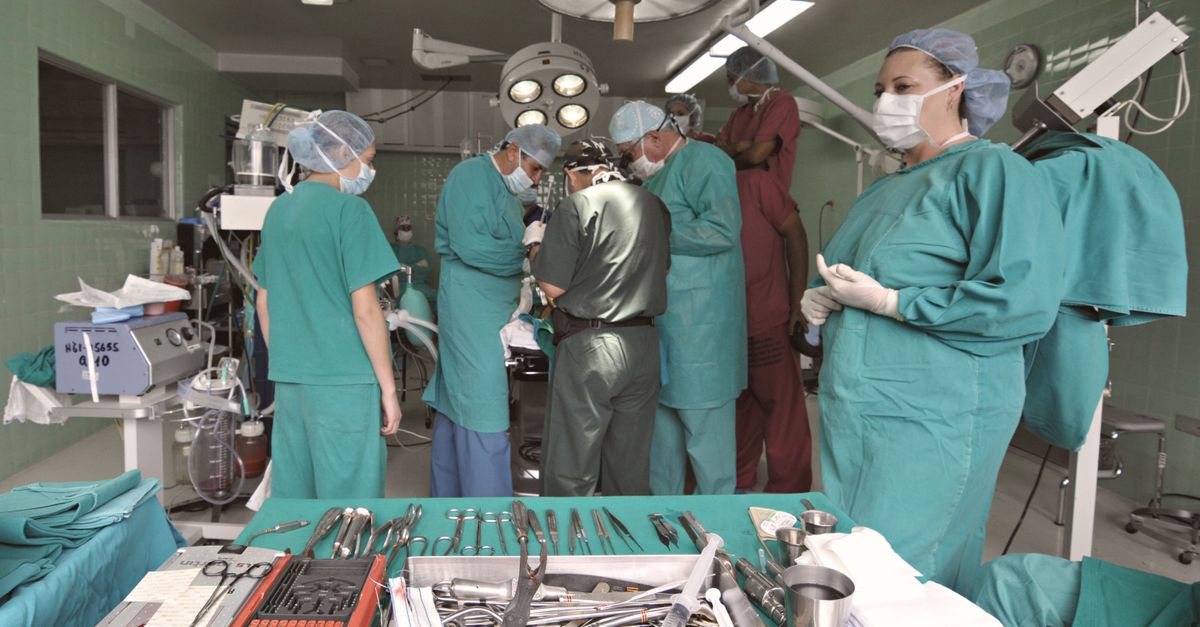
What Clinic Vetting Checks That Accreditation Misses
Clinic vetting is the chair-level audit. It asks four questions in writing: is the named surgeon licensed today, is the facility authorized to operate on international patients today, do verified outcomes match the clinic's claims, and is there a continuity plan once you fly home? Hospital accreditation can clear a corridor. It cannot clear those four.
For Turkey partners, Doctours verifies each surgeon with the Turkish Medical Association and confirms the clinic's International Health Tourism Authorization Certificate with the Republic of Turkey Ministry of Health. Five hair partners currently hold that Ministry authorization: Heva Clinic, MetropolMED, Vialife Clinic, BlueMagic Group Clinic, and Elithair. Heva, MetropolMED, BlueMagic, and Elithair also carry TÜRSAB Health Tourism Agency Certification for the travel side of the trip. Mexico partners run through COFEPRIS plus the state cédula profesional. Poland partners run through the Naczelna Izba Lekarska. US partners run through the state medical board.
The names are not decorative. Dr. Serkan Aygin at Dr. Serkan Aygin Clinic, Dr. Hakan Bozkurtoğlu at Dr. Hakan Clinic, Dr. Cemal Karayazi at MetropolMED, Dr. Asli Simsek Azlar at Vialife Clinic, and Maciej Borejsza at Klinika Borejsza have each been independently confirmed with the issuing authority and observed working. Outcomes sit in a live log: 447 verified Doctours reviews across the hair network, with Dr. Hakan Clinic at 4.9 across 73 reviews, BlueMagic at 4.9 across 99, MetropolMED at 4.8 across 29, and Heva at 4.7 across 80. How Doctours audits surgeons abroad is the full chair-level walkthrough. Why no public hair transplant outcome registry exists yet is why that in-house log still has to do the work a government registry does not.
Building Audit vs Chair Audit: Side by Side
Reading the two layers next to each other is the fastest way to see which risk each one actually buys down. The rows below use current Doctours network credentials and prices, not homepage adjectives.
Layer | What it audits | Protects you from | Does not cover |
|---|---|---|---|
Hospital accreditation (JCI, TEMOS, TÜSKA, AACI) | Building systems: infection control, emergency response, governance, anesthesia infrastructure | Hospital-scale failures — weak sterile processing, missing emergency path, ungoverned inpatient care | The named operating surgeon, graft handling, hair-specific outcomes |
Country facility authorization (Turkey Ministry of Health IHTA) | Operating areas, staffing, sterilization, international-patient protocols | An unlicensed outpatient clinic serving foreigners | Who extracts grafts on the day, verified year-later results |
Independent clinic vetting (Doctours five-stage review) | Named-surgeon license, in-person operating-room observation, technician supervision, booking-tied reviews, aftercare continuity | Bait-and-switch surgeons, hair-mill volume, unverifiable reviews, no US follow-up | It is not a government stamp — it is an audit you can ask to see |
And honestly? You want the stack, not a winner. A JCI hospital that swaps the listed surgeon is not safe for a hair transplant. A well-vetted outpatient clinic with no hospital crash-cart story is still the right setting for local-anesthesia FUE. Doctours keeps hospital stamps for hospital-based partners and chair-level vetting for every hair partner, then quotes the trip in USD. Heva Clinic's Silver package is $3,000 with a $400 deposit and includes two hotel nights, full-service transportation, an aftercare kit, and 12 online follow-ups. Current Doctours pricing lists every active package. What hair transplant accreditation standards actually mean is the decoder for the rest of the badge wall.

How Doctours Uses Both Layers Before You Book
Paperwork is the floor. Every hair clinic in the network still clears a five-stage review: desk credentialing, independent verification with the issuing authority, a multi-day in-person inspection, patient-outcome review, and ongoing re-audits with unannounced visits. The five-stage hair transplant review process is the operational version. A clinic that holds the Ministry authorization but fails the in-person visit does not enter. A clinic that displays a hospital logo it cannot produce on the issuer's public register is treated as uncredentialed.
The point of stacking the layers is so the decision in front of you gets smaller. You are not asked to decode JCI versus IHTA versus a Trustpilot page at 11 p.m. You start with a free assessment, a US-based coordinator, two or three matched clinics, and the named surgeons in writing. Deposits start at $300 at Motion Clinic. Payment plans run up to 36 months. Most packages include 12 months of online follow-up. How much you share, and when you book, stays yours.
If you want the patient-side checklist before any deposit leaves your account, the 30-point clinic vetting checklist is the version you can run yourself. All 15 hair partners have already cleared the version Doctours runs.
The Bottom Line
A hospital stamp protects you from a building that cannot run a hospital. Clinic vetting protects you from a surgeon who is not the person on the website, and from results nobody can show. For an outpatient hair transplant, the second layer is the one that actually sits next to your scalp. The first layer still matters when the procedure belongs in a hospital. You get to use both, without pretending they are the same audit.
Fifteen hair transplant partners in Turkey, Mexico, Poland, and the United States have cleared every chair-level stage. Five Turkey partners hold the Ministry of Health international-patient authorization. Packages run from $2,500 to $7,000, with BlueMagic Group Clinic's Diamond tier at $8,690, deposits from $300, and 447 verified reviews behind the names. You have done enough nights comparing logos. The layers are already stacked. The next move is yours.
Want to see which vetted clinic fits your case? A free Doctours assessment matches you with named surgeons, flat-rate USD pricing, and a US-based care team — no pressure, no commitment.

FAQs
Does hospital accreditation mean my hair transplant surgeon is vetted?
No. Hospital accreditation audits the organization — infection control, emergency response, governance — not the named surgeon who will operate on you. Clinic vetting separately confirms that surgeon's license with the issuing national authority, observes them on an operating day, and tracks verified outcomes. Doctours runs that chair-level review on all 15 hair transplant partners.
Is JCI enough to protect me for a hair transplant abroad?
JCI is a useful hospital-level screen, and the CDC lists it as one body a US patient can use to evaluate a foreign facility. It is not enough for an outpatient hair transplant, because JCI does not name the operating surgeon or audit hair-specific outcomes. Pair any hospital stamp with independently verified surgeon licensing, in-person observation, and booking-tied reviews.
What does clinic vetting check that accreditation does not?
Clinic vetting checks the named surgeon's current license, whether that surgeon is the person operating, technician supervision, graft-handling practice, verified patient outcomes, and a continuity plan once you fly home. Hospital accreditation does not cover those chair-level items. Doctours also confirms country authorizations such as the Turkish Ministry of Health International Health Tourism Authorization Certificate, currently held by five hair partners.
How do I verify a hair transplant clinic that is not inside a JCI hospital?
Ask for the operating surgeon's license number and confirm it with the national medical authority, then confirm the clinic's facility authorization on the issuer's public register — in Turkey, the Ministry of Health international-patient certificate. Ask for an anonymized 12-month outcome log and flat-rate USD pricing in writing. Doctours already completes those checks for every partner clinic before you see the name.
What should I check before surgery abroad, according to CDC medical tourism guidance?
CDC medical tourism guidance recommends screening the foreign facility through recognized accreditation bodies, confirming the provider's credentials, and planning for follow-up care after you return home. Doctours maps those three onto hospital stamps where they apply, chair-level surgeon vetting for every hair partner, and 12 months of online follow-up on most packages priced from $2,500 to $7,000.