




Overview
Medical tourism quality assurance is the layered cross-border discipline of verifying every named surgeon's license with the issuing national authority, auditing hospital and clinic facilities against published Ministry standards, inspecting anesthesia and operating-room protocols on a real operating day, and tracking patient outcomes against verified data — not a self-issued badge on a homepage.
Through Doctours, that audit runs on every partner across 14 vetted hair transplant clinics in Turkey, Mexico, Poland, and the United States, with flat-rate USD packages from $2,200 to $7,000, deposits starting at $300, and 12 to 36 months of US-based aftercare bundled into every booking.
Three Turkey partners — Heva Clinic, MetropolMED, and Vialife Clinic — hold the International Health Tourism Authorization Certificate from the Republic of Turkey Ministry of Health, with Heva and MetropolMED also carrying TÜRSAB Health Tourism Agency Certification, and every credential number independently verifiable with the issuing agency.
Every named operating surgeon — including Dr. Serkan Aygin, Dr. Hakan Bozkurtoğlu, Dr. Cemal Karayazi, Dr. Aslı Şimşek Azlar, and Maciej Borejsza — has been independently confirmed with the issuing national authority and personally observed working with a Doctours team member on the ground before any patient is referred.
Anesthesia and operating-room protocols are audited on-site against American Society of Anesthesiologists practice parameters, covering weight-based lidocaine dosing, live pulse oximetry and blood pressure monitoring, an in-date emergency cart with lipid emulsion, and a documented hospital escalation path before any clinic enters the network.
Medical tourism quality assurance is the layered cross-border discipline of verifying every named surgeon's license with the issuing national authority, auditing hospital and clinic facilities against published standards, inspecting anesthesia and operating-room protocols on a real operating day, and tracking patient outcomes against verified data — before a single patient ever flies. Done properly, it is a continuous discipline that rejects more candidate clinics than it accepts. Through Doctours, that audit lives behind every one of 14 partner clinics in Turkey, Mexico, Poland, and the United States, with flat-rate USD packages from $2,200 to $7,000, deposits starting at $300, and 12 to 36 months of US-based aftercare bundled into every booking.
You have probably already noticed how often clinic websites use the words quality, certified, and international standards without naming a single audit or issuing body. Certified by whom? Measured against what? Verified by which agency, on what date? Those four questions separate quality assurance from marketing. The honest answer determines whether your safety abroad rests on a system someone signed their name to — or on a paragraph someone copied off a template.
So this article is the part most clinic homepages skip. What hospital and surgeon standards actually look like for international patients. How they get verified, by whom, against what bar. And how Doctours folds the whole thing together so you do not have to learn three regulators in three languages before you ever sit in a chair. No mystique. No “trust us.” Just the standard, the mechanism behind it, and what it changes about the decision in front of you.
What Does Medical Tourism Quality Assurance Actually Cover?
At its core, this discipline is the structured process of confirming that a hospital, clinic, and named surgeon outside your home country meet a verified safety standard before you ever step inside. It rests on four pillars: surgeon licensing, facility standards, anesthesia and operating-room protocols, and outcome and continuity-of-care tracking. The CDC's medical tourism guidance calls those four out as the strongest predictors of safe outcomes for US patients traveling abroad. The WHO's patient safety framework treats them as the global baseline for any cross-border surgical care.
Two distinctions matter. First, quality assurance is verification against an external standard — not the clinic claiming it is good. Second, “international” changes the unit of work: the audit has to land at the right desk, in the right ministry, in the right country, for every named surgeon and every operating credential. That is not a Google search. It is an active relationship with the issuing authority, kept warm year-round.
Put simply, a real audit answers four questions in writing. Is the named surgeon currently licensed by the national authority? Is the facility licensed to operate on international patients today? Are the anesthesia and operating-room protocols observed on a real operating day? Do verified patient outcomes match what the clinic claims? If any of the four is missing, vague, or self-reported, quality assurance has not happened — naming has. The five-stage Doctours clinic review walks through each layer in detail.
Why Quality Assurance Looks Different Abroad Than At Home
The temptation, especially with a clinic whose homepage is in three languages and includes a drone shot of the lobby, is to treat international quality assurance as a longer version of the domestic kind. It is not. The structure is different, and the gaps are different. There are at least five reasons it sits in a category of its own.
No single registry. A US patient checking a US surgeon can pull up a state medical board in 30 seconds. There is no global equivalent. Turkey's surgeon registry sits with the Turkish Medical Association (Türk Tabipleri Birliği). Mexico's sits with COFEPRIS federally and the cédula profesional through each state's medical council. Poland's lives with the Naczelna Izba Lekarska. Each has its own format, language, and version of “current and unrestricted.”
Self-issued credentials. Plenty of international clinics print “internationally certified” or “ISO compliant” on the site with no issuer named and no public certificate number. A credential without a public issuing body and a verifiable license number is not a credential.
The marketing surgeon vs. the operating surgeon. The most common quiet failure in this industry is a clinic listing a well-known founder on the website and putting a different doctor in the operating chair on the day. From 6,000 miles away, this is almost impossible to catch on paper.
Outcome opacity. Clinic-owned reviews are easy to fabricate. Independent third-party platforms — Google, Trustpilot, RealSelf — are harder. Pairing those with verified bookings data from a facilitator's own operations log is harder still.
No assumed regulator for the trip itself. A foreign surgical patient is not always covered by their home insurance, their home medical board, or any cross-border body. The quality-assurance layer has to do the work no single regulator is doing.
Every one of those gaps is a place where a patient quietly absorbs the risk if no one else is doing the work. The red flags every patient should spot in hair transplant safety abroad walks through what those gaps look like at the clinic level, and the safety profile of a hair transplant in Turkey shows how the right national credentials change the math.
How Hospital and Facility Standards Get Verified
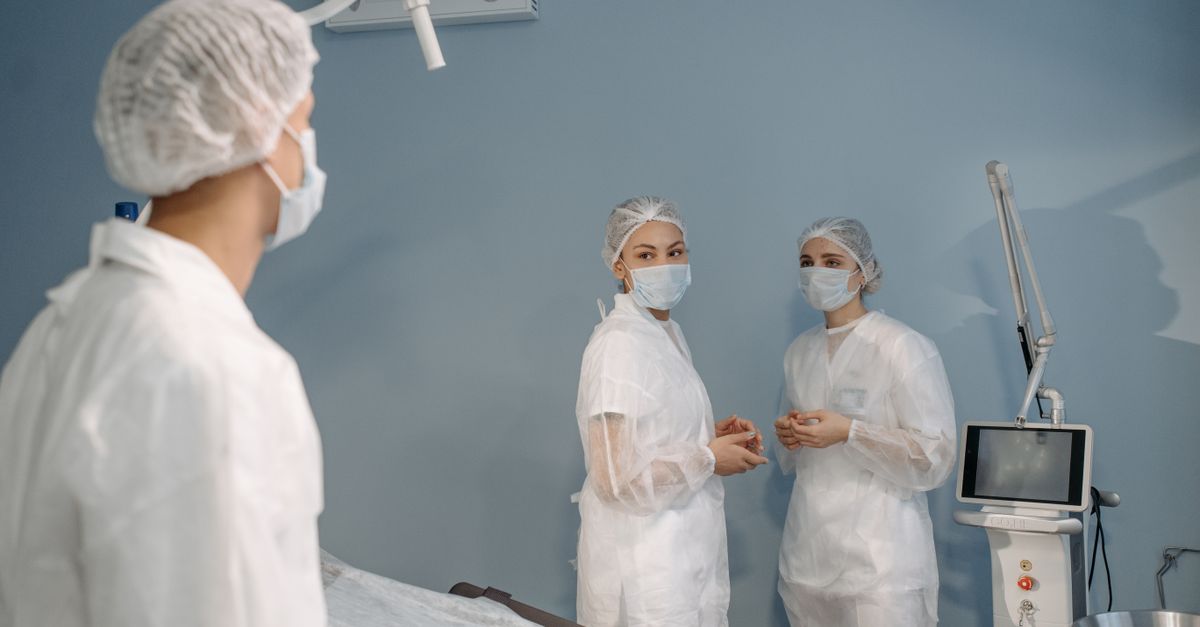
A hospital or clinic facility is the physical and operational container the procedure happens inside. Hospital and facility standards cover the operating area, sterilization, infection control, staffing ratios, anesthesia equipment, emergency response, and how the clinic actually handles an international patient from arrival to discharge. The credentials that audit those things are country-specific and procedure-specific — not one universal badge.
In Turkey, the credential that actually applies to a dedicated hair transplant clinic is the International Health Tourism Authorization Certificate from the Republic of Turkey Ministry of Health. The Ministry licenses a facility only after on-site inspection of operating areas, sterilization, staffing, and international-patient protocols, and the credential can be suspended or revoked. Three Doctours partners hold it: Heva Clinic, MetropolMED, and Vialife Clinic. Heva and MetropolMED also carry TÜRSAB Health Tourism Agency Certification from the Association of Turkish Travel Agencies, covering the travel-coordination side of the trip. Every credential number is independently verifiable with the issuing agency, and Doctours verifies both. The JCI-accredited hair transplant clinic explainer covers how those Turkey credentials compare against the hospital-level Joint Commission International standard.
In Mexico, facility licensing runs through COFEPRIS at the federal level. Art Line Clinic, with sites in Tijuana and Mexico City, and Esthetic Hair Mexico operate under that framework. Whether a hair transplant in Mexico is safe walks through the Mexico version from the patient side.
In Poland, facility standards sit under Polish EU healthcare regulation, with surgeon checks running through the Naczelna Izba Lekarska (Supreme Medical Chamber). Klinika Borejsza in Warsaw, headed by Dr. Maciej Borejsza, operates under that framework.
In the United States, facility licensing falls to state health departments and CMS where applicable, with surgeon licensing through the state medical board. American Mane, Esthetic Hair Miami, and Motion Clinic sit inside that system.
Beyond the country credential, two cross-border process standards are worth checking. ISO 9001:2015 audits clinic-wide quality management — how processes are documented, tracked, and improved. It is process-based, not procedure-specific, but useful as a supplemental signal that the clinic actually has a quality system. Joint Commission International accreditation, where it applies, covers hospital-level operations and is most relevant when a hair transplant happens inside a large JCI-accredited general hospital rather than a dedicated outpatient clinic.
How Surgeon Credentials Hold Up Beyond the Website
A licensed facility with the wrong surgeon in the room is still the wrong outcome. That is why surgeon-level verification is the single most decisive moment in any quality-assurance audit, and why Doctours does it before any patient is referred. Three checks happen, in order.
First, license verification with the issuing national authority. Every named operating surgeon's license is confirmed directly with the relevant body — the Turkish Medical Association in Turkey, COFEPRIS plus the state cédula profesional in Mexico, the Naczelna Izba Lekarska in Poland, and the state medical board in the United States. The check returns a current license number and current standing. A surgeon name that does not return a current, unrestricted license disqualifies the clinic outright. Not after a follow-up email. Not after a clarifying call. Disqualified.
Second, procedure-specific peer membership. Membership in the International Society of Hair Restoration Surgery (ISHRS) signals active hair-restoration practice and continuing education. It is procedure-specific in a way that a general medical license is not, and the society treats tracked outcomes and continuity of care as among the strongest indicators of clinic quality.
Third, an in-person observation on an operating day. A Doctours team member flies to Istanbul, Tijuana, Mexico City, Warsaw, or wherever the clinic operates, and watches the named surgeon working — opening incisions, designing the hairline, supervising technicians. Names tied to verified observations include Dr. Serkan Aygin at Dr. Serkan Aygin Clinic, Dr. Hakan Bozkurtoğlu at Dr. Hakan Clinic, Dr. Cemal Karayazi at MetropolMED, Dr. Aslı Şimşek Azlar at Vialife Clinic, Maciej Borejsza at Klinika Borejsza, and Ugur Bayram at Fizyoestet Hair. If the named surgeon is not the one operating on the day, the clinic does not enter the network. Period.
The full international clinic vetting process walks through each surgeon-level check in more depth, and how we vet the best hair transplant clinics in Turkey covers the regional version.
Anesthesia and Operating-Room Protocols That Actually Matter
A modern hair transplant is performed under tumescent local anesthesia — typically lidocaine, often with low-dose epinephrine to control bleeding, sometimes with light oral sedation. There is no general anesthesia, no intubation, and no overnight stay in a standard hair transplant. That keeps the safety profile narrower than an inpatient surgery, but it does not make protocols optional. The risks that do exist — lidocaine toxicity, vasovagal reactions, anxiety episodes — depend on dosing limits, real-time monitoring, and a working escalation path.
Here is what an audit of anesthesia and operating-room standards actually checks on a Doctours in-person visit:
Lidocaine dosing. Maximum dosing is checked against weight-based limits referenced by American Society of Anesthesiologists practice parameters and standard hair-restoration protocols. A clinic that quietly exceeds maximum dosing — usually to keep a long session pain-free — fails the audit.
Live monitoring. Pulse oximetry, blood pressure cuff, and ECG on every patient, with a trained team member assigned to monitoring the entire session. No exceptions for “short” cases.
Emergency cart and oxygen. A stocked emergency cart with lipid emulsion (the antidote for systemic lidocaine toxicity), oxygen, airway equipment, and IV access is on site and within reach of the operating area. The cart is checked for in-date medications, not just listed in a binder.
Single-use disposables, real sterilization. Disposable punches, needles, and grafting tools are confirmed as actually single-use, not re-used between patients. Sterilization protocols are observed in real time, not just reviewed on paper.
Escalation path. Every clinic has a documented relationship with a nearby hospital for the rare cases where a transfer is needed — named hospital, named contact, agreed time window, in writing.
Here is the thing: most hair transplant clinics never need any of those emergency steps on a given day. But the standard a clinic holds when nothing is going wrong is the same standard it holds when something does. You should never be the patient who finds out a clinic does not have lipid emulsion in stock. A real quality-assurance program closes that gap before you ever sit in the chair.

Medical Tourism Quality Assurance Standards Compared
The cleanest way to see how the different credentials stack up is to lay them side by side. Each row below is one of the standards that gets named in international hair-transplant marketing. The columns spell out what each actually audits, who issues it, and whether it applies to a dedicated outpatient hair transplant clinic in particular.
Standard | Issued By | What It Audits | Relevance to a Hair Transplant Clinic |
|---|---|---|---|
JCI Accreditation | Joint Commission International | Hospital-level operations, anesthesia, infection control, governance, emergency response | Most relevant when the procedure is performed inside a large JCI-accredited general hospital; rare for dedicated outpatient hair clinics |
International Health Tourism Authorization Certificate | Republic of Turkey Ministry of Health | Facility, staffing, sterilization, patient-safety and international-patient protocols | Core clinic-level credential for Turkey hair transplants; held by Heva Clinic, MetropolMED, and Vialife Clinic |
TÜRSAB Health Tourism Agency Certification | Association of Turkish Travel Agencies | Travel-coordination side of medical tourism trips | Held by Heva Clinic and MetropolMED; audits the logistics side of the trip |
ISO 9001:2015 Quality Management | Accredited ISO certification bodies | Process-based quality management, document control, continual improvement | Useful supplemental signal that the clinic operates a working quality system |
ISHRS Membership | International Society of Hair Restoration Surgery | Active hair-restoration practice and continuing education at the surgeon level | Procedure-specific peer signal; complements national licensing |
National Medical Authority License | TTB (Turkey), COFEPRIS (Mexico), NIL (Poland), US state boards | Individual surgeon licensing — current standing, scope of practice, any restrictions | The single most important credential at the surgeon level; directly verifiable with the issuing authority |
ASA-Aligned Office-Based Anesthesia Standards | National anesthesia bodies, including the American Society of Anesthesiologists | Dosing limits, monitoring, emergency response, anesthesia personnel | Reference standard for the in-office anesthesia protocols a hair transplant clinic must meet |
Reading down the “Relevance” column tells you the story. No single badge covers the whole picture. A real quality-assurance program layers them — the Ministry credential for the facility, the national license for each surgeon, ISHRS for the procedure, ISO for the process, and on-site verification of the anesthesia and operating-room protocols. The 30-point hair transplant vetting checklist walks through each layer from the patient side, in the version you can run yourself before you ever wire a deposit.
What Real Quality Assurance Looks Like for a US Patient
Here is the part that matters most: almost all of the work above happens before you ever hear a clinic's name. That is intentional. The license verifications, the facility audits, the operating-room observations, the outcome reviews — none of it exists to impress anyone. It exists so the decision in front of you is not which one of these hundreds of clinics is safe, which is impossible to answer from 6,000 miles away. It is which of these audited clinics fits my case, which is a far smaller and far more answerable question.
From your side, the flow stays quiet. You start with a free Doctours assessment. Your US-based care coordinator comes back with two or three matched clinics, flat-rate USD quotes, full inclusions, deposit and refund terms in writing, and the named surgeons who would operate on you. You can compare on price, on technique, on aftercare length, on review history — whatever matters most to you. Deposits start at $300 at Vera Clinic and Motion Clinic. Packages run from $2,200 at Esthetic Hair Turkey to $7,000 at American Mane and Esthetic Hair Miami, with the rest of the network clustered in between. Verified outcomes are tracked across nearly 300 Doctours reviews: Vera Clinic currently sits at 4.7 stars across 69 reviews, MetropolMED at 4.8 across 29, Dr. Serkan Aygin Clinic at 4.6 across 40, and Heva Clinic at 4.3 across 69.
And honestly? The point of putting this much weight on the audit is so the rest of the trip can be the easy part. End-to-end medical travel support covers how the quality-assurance layer folds into the rest of the coordination — the flights, the hotel, the transfers, the recovery, and the 12 to 36 months of US-based aftercare a named coordinator handles after you fly home.
The Bottom Line
Real quality assurance for an international hair transplant is not a badge on a homepage. It is a continuous discipline — surgeon license checks with the issuing national authority, facility audits against published Ministry standards, anesthesia and operating-room protocols observed on a real operating day, and outcome reviews against verified patient data, year after year. Through Doctours, that work runs on every partner before you ever see its name, and it keeps running for as long as the clinic stays in the network.
Fourteen partner clinics in Turkey, Mexico, Poland, and the United States have cleared every layer. Every named surgeon is verifiable with the issuing national authority. Every facility credential is verifiable with its issuing ministry or board. Every package is flat-rate in USD, from $2,200 to $7,000, with deposits starting at $300 and 12 to 36 months of US-based aftercare built in. You have done enough nights with twenty tabs open trying to tell the audited clinics from the staged ones. The names are real. The credentials check out. The standard is in writing. The plan is already in place — whenever you are ready.
Want to see which audited clinics fit your case? A free Doctours assessment matches you with verified surgeons, flat-rate USD pricing, and a US-based care team that handles every step — no pressure, no commitment.

FAQs
What is medical tourism quality assurance?
Medical tourism quality assurance is the cross-border process of verifying every named surgeon's license with the issuing national medical authority, auditing hospital and clinic facilities against published Ministry or accreditation standards, inspecting anesthesia and operating-room protocols on a real operating day, and tracking patient outcomes against verified data. Done properly, it is a continuous discipline that gets re-run every year — not a one-time badge a clinic prints on its homepage.
How does Doctours verify a surgeon's credentials before referring a patient?
Doctours independently verifies every named operating surgeon's license with the issuing national authority — the Turkish Medical Association in Turkey, COFEPRIS plus the state cédula profesional in Mexico, the Naczelna Izba Lekarska in Poland, and US state medical boards in the United States. A Doctours team member then flies to the clinic and observes the named surgeon working in real time before any patient is referred. A surgeon name that does not return a current, unrestricted license at the issuing authority disqualifies the clinic outright.
Are anesthesia standards the same at hair transplant clinics abroad as in the US?
Most modern hair transplant clinics abroad use the same tumescent local anesthesia protocol — lidocaine, often with low-dose epinephrine, sometimes with light oral sedation — as their US counterparts, with the relevant safety standards aligning with American Society of Anesthesiologists practice parameters. Doctours audits each clinic's anesthesia and operating-room protocols on-site, including weight-based lidocaine dosing, live pulse oximetry and blood pressure monitoring, an in-date emergency cart with lipid emulsion, and a documented hospital escalation path. Clinics that cannot demonstrate the protocol in practice do not enter the network.
Which Doctours partner clinics hold international health-tourism credentials?
Three Turkey partners hold the International Health Tourism Authorization Certificate from the Republic of Turkey Ministry of Health: Heva Clinic, MetropolMED, and Vialife Clinic. Heva Clinic and MetropolMED also carry TÜRSAB Health Tourism Agency Certification from the Association of Turkish Travel Agencies. Both credential numbers are independently verifiable with the issuing agencies, and Doctours verifies both before any patient is referred.
Can I check a foreign hospital or surgeon's accreditation myself before I book?
Yes, and you should. Ask the clinic for the named operating surgeon's full legal name and license number, and confirm it directly with the issuing national authority — the Turkish Medical Association for Turkey, COFEPRIS and the state cédula profesional registry for Mexico, the Naczelna Izba Lekarska for Poland, or the state medical board for US clinics. Ask for the facility's regulator-issued license number and confirm it independently. If a clinic cannot produce a license number that you can verify with the issuing authority, that alone is reason to walk away.