




Overview
How hair transplants work comes down to one principle: a surgeon relocates your own permanent donor follicles to thinning areas, one graft at a time, and the moved hair keeps growing for life.
Every modern hair transplant follows the same five stages — consultation and design, harvesting, graft preparation, channel creation and implantation, then recovery — and a single session moves 2,000 to 5,000 grafts across six to eight hours under local anesthetic.
FUE, DHI, and FUT differ only in how follicles are harvested and placed: FUE and DHI leave tiny dot scars and are used at every Doctours partner clinic, while FUT leaves one linear scar and is now rarely offered abroad.
Through Doctours the whole procedure is priced per all-in package — from $2,200 in Turkey to $7,000 at US-based partners like American Mane in Aventura, Florida — with deposits from $300 and payment plans up to 36 months.
The result takes about a year: transplanted hairs shed within weeks, regrow from month three, and reach full density around month twelve, with a US-based care team and 12 to 36 months of online follow-ups supporting the wait.
How hair transplants work is simpler than the marketing makes it sound: a surgeon moves healthy hair follicles from the permanent donor zone at the back and sides of your head to the thinning areas on top — one graft at a time — and the relocated hair keeps growing for the rest of your life. Three methods do the moving: FUE (Follicular Unit Extraction), DHI (Direct Hair Implantation), and FUT (Follicular Unit Transplantation). They differ only in how follicles are harvested and placed, not in the biology that makes the result permanent. Through Doctours, the full procedure runs from $2,200 in Turkey to $7,000 at US-based partners, all-in, with deposits from $300 and payment plans up to 36 months. A single session typically moves 2,000 to 5,000 grafts across six to eight hours, and the final look lands around the twelve-month mark.
If you've gotten this far, you've probably watched the clips. The grid of tiny dots on a shaved head, the gloved hands, the time-lapse that ends with a full hairline. It looks equal parts impressive and slightly alarming — and somewhere in there is the quiet question you actually want answered: what is really happening to my head for eight hours, and will it still look like me?
Fair question. The procedure has a reputation for being mysterious, mostly because clinics show you the before-and-after and skip the middle. So let's do the opposite. No hype, no scare — just the actual mechanics, from the first consultation to the day your new hair finally grows in.
How Does a Hair Transplant Work, Step by Step?
Every modern hair transplant follows the same five stages, whichever method your surgeon uses. The donor hair at the back of your head is genetically resistant to the hormone that drives pattern baldness, so once it's moved, it keeps that staying power. That's the whole principle the procedure rests on.
Consultation and design. The surgeon measures your donor density, stages your loss on the Norwood scale, and draws the new hairline with you before anyone picks up a tool.
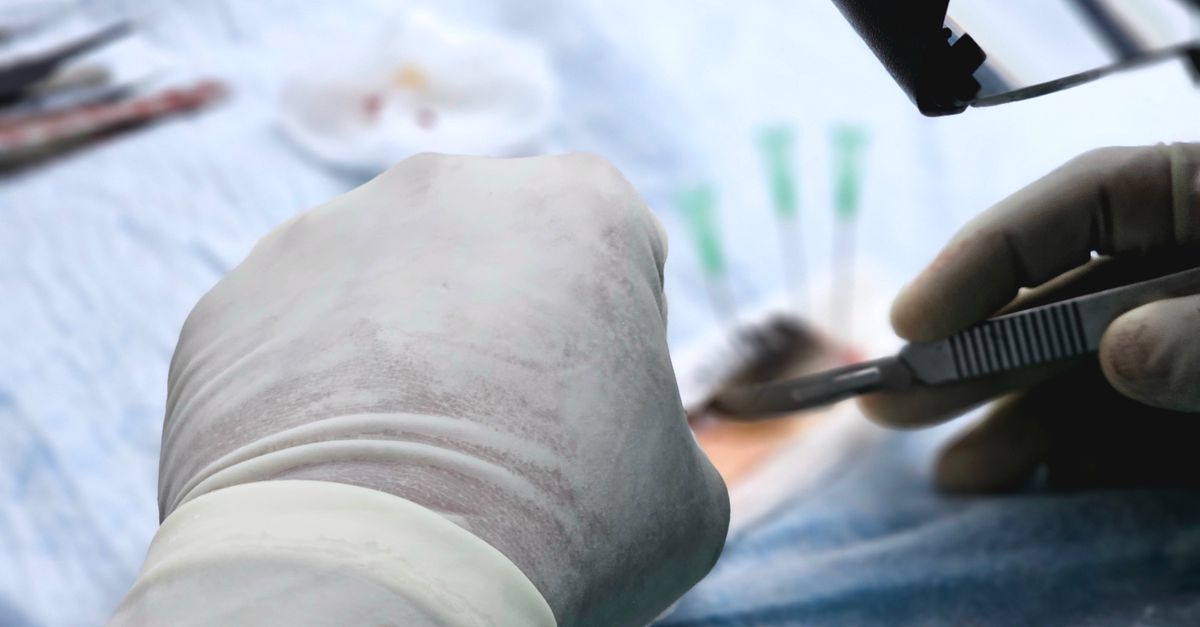
Harvesting. Individual follicular units — grafts of one to four hairs — are removed from the donor zone, either one by one (FUE and DHI) or in a thin strip of scalp (FUT).
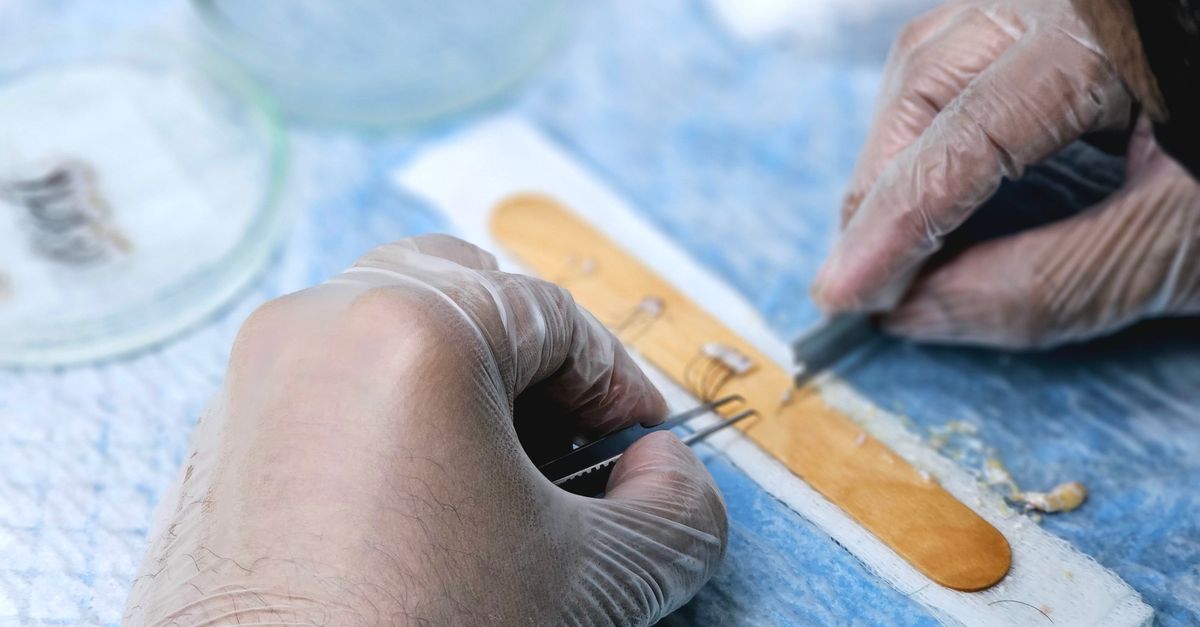
Graft preparation. A technician sorts and trims the grafts under magnification and keeps them in a chilled solution so they stay viable.
Channel creation and implantation. The surgeon makes tiny recipient sites at precise angles and places each graft, controlling depth and direction so the hair grows the way it naturally would.
Recovery and regrowth. The transplanted hairs shed within a few weeks, rest, and then regrow over the following months.
A few facts sit underneath those steps. A hair transplant relocates follicles rather than creating new ones, so it works with the hair you have — not extra hair from nowhere. The International Society of Hair Restoration Surgery treats FUE, DHI, and FUT as accepted techniques, and points to surgeon experience and graft handling — not the tool — as the strongest predictor of a natural result. And the session usually runs six to eight hours under local anesthetic, so you're awake, comfortable, and can take breaks.
What Happens Before Surgery Day?
The result is decided long before the first graft moves. In the consultation, the surgeon counts your donor supply and stages your loss — our Norwood scale self-assessment is a good way to place yourself ahead of time. From there comes a graft estimate, the number that drives both the plan and the price; our graft count guide explains how surgeons reach it.
Here's what that looks like in practice through Doctours. Every partner surgeon reviews your photos before you book, so the graft number in your quote reflects your actual scalp — not a sales script. The hairline design is done with you, not to you, because a natural angle at the front edge is what separates a result that looks grown-in from one that looks transplanted. And the donor map is drawn to protect your lifetime supply, since follicles are finite and a good plan saves some for later.

FUE, DHI, and FUT: How Do the Three Methods Differ?
All three methods share stages one, two, three, and five above. What changes is how follicles come out and how they go back in. FUE removes grafts one at a time with a small rotating punch, then the surgeon opens channels and places them. DHI also removes grafts one at a time, but loads each into a Choi implanter pen that creates the channel and sets the graft in a single motion. FUT removes a thin strip of scalp from the donor area, and a team divides that strip into individual grafts under a microscope.
Method | How grafts are harvested | Scarring | Best suited to |
|---|---|---|---|
FUE (incl. Sapphire FUE) | Extracted one at a time with a micro-punch | Tiny dot scars, fade as donor hair grows | Most cases, including large 4,000+ graft sessions |
DHI (Choi pen) | Extracted one at a time; implanted directly via pen | Tiny dot scars, same as FUE | Hairline detail and smaller, precise sessions |
FUT (strip method) | A strip of scalp is removed and dissected into grafts | One thin linear scar along the donor area | Very large graft yield when a linear scar is acceptable |
Here's the honest part clinics rarely volunteer: FUT is the oldest of the three and leaves a single linear scar, which is why most international clinics — and every clinic in the Doctours network — have moved to FUE and DHI, both of which leave only tiny dot scars. FUT still has a place when a surgeon needs maximum grafts in one pass and the patient keeps their hair long enough to hide the line. For the deeper technique-by-technique breakdown, our guides on FUE vs DHI and FUT vs FUE compare them side by side.
A worked example from the network: MetropolMED in Istanbul, led by hair transplant surgeon Dr. Cemal Karayazi and authorized by the Republic of Turkey Ministry of Health, prices Sapphire FUE and DHI identically across its tiers and even offers a Hybrid package that uses FUE for the dense areas and DHI for the hairline. That's the modern shape of the procedure — the method follows the scalp, not the brochure.
How Much Does It Cost, and What's Included?
Through Doctours, a hair transplant is priced per package, not per graft, and the number covers far more than the surgery. Turkey packages start at $2,200 at Esthetic Hair Turkey. Mexico runs roughly $2,500 to $4,000 at clinics like Art Line Clinic in Tijuana and Mexico City. US-based partners such as American Mane in Aventura, Florida sit at $7,000. Deposits start at $300, and payment plans run up to 36 months.
The all-in package is the point. A typical Doctours package bundles the procedure, hotel nights, airport and clinic transfers, bloodwork, medication, and an aftercare kit into one USD price with no per-graft surprises. Doctours is free for patients — clinics in the network pay the coordination fee, so the price you see is the price you pay. For the full US-versus-abroad math, our Turkey vs. United States cost breakdown lays out where the savings actually come from.

What Does Recovery Look Like After the Procedure?
The surgery is one day. The result takes a year — and knowing that up front is what keeps the wait from feeling like something went wrong. In the first week, tiny scabs form around each graft and the donor area feels tight; most people are back at a desk within four or five days. Around weeks two to six, the transplanted hairs shed. This is normal and expected — the follicle stays, only the temporary hair falls — and our guide on shock loss after a hair transplant explains why.
Then comes the quiet stretch. From roughly month three, the relocated follicles wake up and start pushing new hair, thickening steadily through months six to twelve. Full density and the final texture land around the one-year mark. Our month-by-month growth timeline maps the whole arc, and the first 30 days of aftercare covers the washing, sleeping, and do-not-touch rules that protect your grafts while they take.
This is where medical travel earns its keep. Through Doctours, a US-based care team stays reachable 24/7 by call, text, or video chat during recovery, and online follow-ups with your surgeon run 12 months at most partner clinics — up to 36 months at Dr. Serkan Aygin Clinic. The US Centers for Disease Control and Prevention recommends arranging follow-up care before any procedure abroad — the handoff home is how that gets built in, not improvised.
The Bottom Line
It all comes down to one durable idea: your own permanent hair, moved to where you want it, growing for good. FUE, DHI, and FUT are just three ways of doing the moving — and the method matters far less than the surgeon holding the tools and the plan drawn before the first graft comes out.
That's the part worth holding onto if the procedure has felt like a black box. There's no trick in the middle of the time-lapse. It's a careful, hours-long, well-understood process — and through vetted partner clinics in Turkey, Mexico, Poland, and the US, it comes with all-in USD pricing from $2,200, a named surgeon, and a US-based team that carries the plan home with you.
You've done the research. You understand the procedure now better than most people ever bother to. Whether your hair looks like you again a year from now isn't a mystery anymore — it's a decision, and it's yours to make when you're ready.
Curious what the procedure would look like for your specific case? A free assessment matches you with vetted clinics, all-in USD pricing, and a US-based care team — no pressure, no commitment.

FAQs
How does a hair transplant work?
A hair transplant moves healthy hair follicles from the permanent donor zone at the back and sides of your head to thinning areas on top, one graft at a time. Because donor follicles are genetically resistant to pattern baldness, the transplanted hair keeps growing for life. The procedure has five stages — consultation and design, harvesting, graft preparation, channel creation and implantation, and recovery — and usually takes six to eight hours under local anesthetic.
What is the difference between FUE, DHI, and FUT?
All three transplant the same follicles; they differ in harvesting and placement. FUE extracts grafts one at a time with a micro-punch and places them into pre-made channels, DHI extracts one at a time and implants each directly with a Choi pen, and FUT removes a strip of scalp that is dissected into grafts. FUE and DHI leave tiny dot scars, while FUT leaves a single linear scar — which is why most clinics abroad, including every Doctours partner, use FUE and DHI.
How long does a hair transplant take?
A single hair transplant session usually takes six to eight hours, depending on the graft count, and is done in one day under local anesthetic. Most patients have 2,000 to 5,000 grafts moved in that time. You stay awake throughout and can take breaks.
Are hair transplant results permanent?
The transplanted follicles are permanent because they come from the donor zone that resists pattern baldness, so the relocated hair keeps growing for life. Your original, non-transplanted hair can still keep thinning, which is why surgeons often plan medication such as finasteride and possible future touch-ups so the overall look holds as you age.
How much does a hair transplant cost through Doctours?
Through Doctours, a hair transplant costs from $2,200 in Turkey, roughly $2,500 to $4,000 in Mexico, and $7,000 at US-based partners, priced per all-in package rather than per graft. The price bundles the procedure, hotel, transfers, medication, and aftercare, with deposits from $300 and payment plans up to 36 months. Doctours is free for patients because clinics in the network pay the coordination fee.